
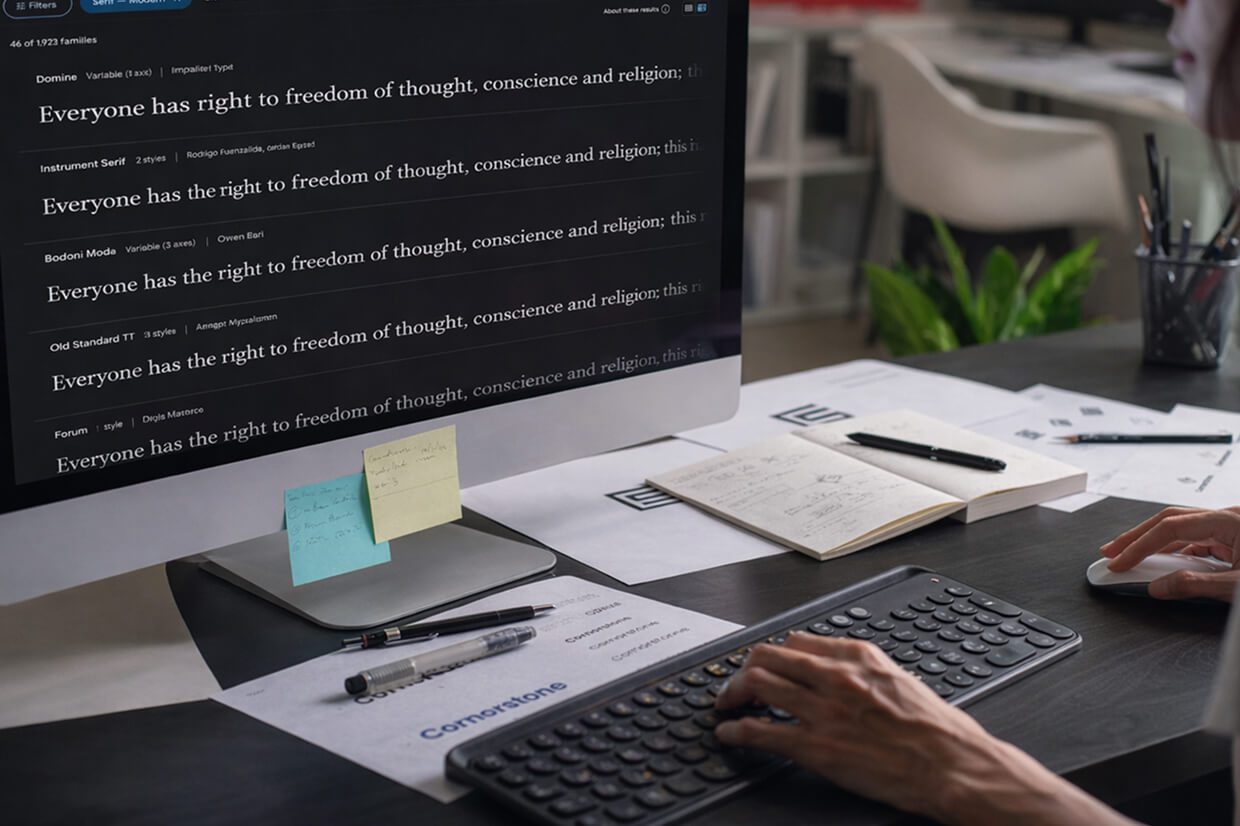
Typography is not just for decoration: it can also help convey a brand’s voice. Before color, before animation, before layout grids get clever, type tells people what kind of company they are dealing with.
Most business owners think fonts are a taste decision. Designers who know better treat typography as infrastructure. Read on to find out how the best web designers use typography for brand feel.
Typography Sets Tone Before Content Is Read
Type works at a pre-conscious level. A high contrast serif with sharp terminals signals heritage, editorial weight, maybe even luxury. A geometric sans serif with wide tracking leans modern, technical, sometimes cold.
Stanford Guidelines for Web Credibility shows that typography influences perceived trust and readability, which in turn affects user judgment and decision making. That is not theory, that is measurable behavior. When Stanford researchers studied web credibility, design and typography ranked higher than company claims in shaping trust. Brand feel starts there. Not in the tagline. Not in the hero copy. In the shapes of letters.
Serif, Sans, and the Psychology of Form
Serifs carry historical weight because print carried authority for centuries. The New York Times still uses a serif for a reason: tradition signals credibility.
On the other hand, sans serifs feel direct and efficient. Look at how companies like Google moved toward clean sans families to support clarity across devices. Google’s own Material Design documentation goes deep on typography systems and scale, and it is worth reading.
Design choices are based not on trends but on what emotional tone supports the business model. A law firm that picks a playful rounded display face is sending mixed signals. Conversely, a children’s toy brand set in a rigid neo-grotesque font may feel distant.
Hierarchy Is Brand Structure in Disguise
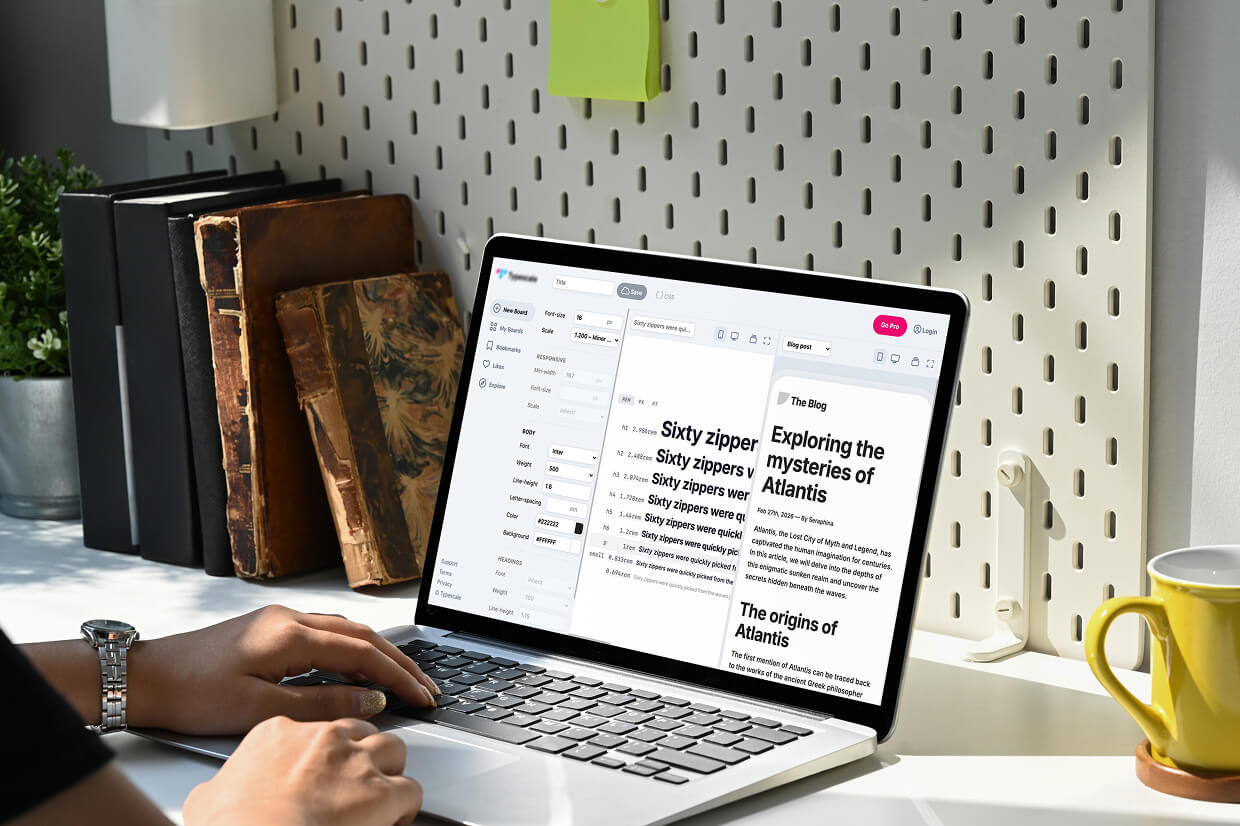
Hierarchy is not just about designating H1, H2s, H3s: it is about finding the right rhythm through proper size, weight, spacing, line length, and contrast. When hierarchy is tight and intentional, the brand feels organized and confident. When everything screams at the same volume, it feels amateur.
Research from The Baymard Institute shows how poor readability and weak visual hierarchy harm ecommerce usability and conversions. It’s worth nothing that this is not merely a design opinion but a lab-tested user behavior.
Best web designers build a typescale that reflects business priorities. Product names get weight. Supporting copy breathes. Legal text exists but does not dominate. Structure communicates how the company thinks.
Line Length, Spacing, and the Feel of Breathing Room
Here is where things get overlooked. Line length between 50 and 75 characters is widely cited as ideal for body text readability. Readability is not sexy, but it drives time on page and comprehension.
Tight leading and cramped margins create pressure. Generous spacing creates calm. A premium brand often uses space as a signal of confidence. Discount brands compress more information into the viewport. This is a pattern seen again and again across retail, SaaS, publishing, and DTC.
Custom Type Versus System Fonts
Custom typography can lock in brand recognition. Think about how Coca Cola’s script is inseparable from its identity. Even at a glance, the letterforms carry decades of equity.
But custom type is not automatically superior. System fonts such as San Francisco and Roboto are engineered for screen clarity at scale. Apple’s Human Interface Guidelines explain why their system type is tuned for legibility across devices and resolutions.
Design decisions should always take into consideration distribution and performance. If a brand lives across web, app, email, ads, and print, the type system must survive all those environments without breaking.
When Designers Get It Wrong

Overstyling is common. Three display fonts, four weights, animated headlines, letter spacing cranked to 200. It looks creative for five minutes, then it becomes exhausting.
Another mistake is copying a trend without understanding context. Brutalist type works for a niche fashion label with a strong art direction. It rarely works for a regional HVAC company that needs trust and clarity.
Brand feel is less about impressing other designers and more about aligning type with business intent. That alignment is what separates serious work from Dribbble experiments
Typography and Conversion, Not Just Aesthetics
In controlled experiments, subtle changes in font readability have influenced conversion rates and task completion times. One well known example from usability research showed that difficult to read fonts can reduce user confidence in instructions even when the content is identical.
Type influences perceived effort. If the text feels hard to read, the product feels harder to use. That connection matters in checkout flows, pricing pages, and long form sales content.
Brand feel and performance are not separate tracks. They are the same system.
The Integrated View
Typography does not live alone. SEO depends on clean semantic structure. Paid traffic benefits from landing pages that feel consistent with the ad message. Email needs type that holds up in constrained templates. Development must support proper rendering, fallback stacks, and performance budgets.
Seen in isolation, type looks like style. Seen in context, it is part of the entire marketing stack.
That is why the best web designers think beyond fonts. They think about crawlable HTML, variable font loading, CLS impact, and how heading structure supports search engines. Brand feel and technical execution move together.
If You Are Rethinking Your Brand Feel
If typography feels like an afterthought, it probably is. And if the brand feels inconsistent across web, ads, and email, the type system is usually the crack in the foundation.
For those looking to refine typography for their brand feel, take a look at our list of vetted web designers who understand how type shapes perception and performance. The difference shows up in how the site reads, how it converts, and how it feels the moment it loads.